
What Is Executive Protection? Who Needs It & Why It Matters
Most people picture a big guy in a black suit standing behind a celebrity when they hear “executive protection.” And while that image isn’t entirely wrong, it only scratches the surface of what the role actually involves.
The real work happens quietly, in planning rooms, on advance visits, and in threat briefings, long before executive security guards are even deployed.If you’ve ever wondered what executive security is, whether you need it, or what it actually involves, this guide breaks it all down in plain terms.
Key Takeaways
- Executive protection is a proactive, intelligence-led security approach, focused on preventing risks rather than reacting to them.
- Executives, celebrities, high-net-worth individuals, entrepreneurs, and legal witnesses all regularly use executive protection services.
- A professional executive protection team works quietly in the background through planning, advance work, coordination, and continuous risk evaluation.
- In California, executive protection operates under regulated security laws, requiring BSIS licensing, Guard Cards, and additional firearm permits when applicable.
- Executive protection is a proactive, intelligence-led approach, while a bodyguard is mainly a reactive presence.
Table of Contents
What Is Executive Security?
Executive security, (or executive protection (EP) is a risk-based safety service designed to protect high-profile individuals from potential threats. It goes beyond traditional security, offering a comprehensive program including risk assessment, secure transportation, residential security, travel security, and digital threat mitigation.
In California, executive protection isn’t a separate license category, but it’s still regulated under the state’s private security laws. EP professionals are required to have a valid Guard Card issued by BSIS, which means they’ve gone through background checks and basic security training. The company providing the service must also be licensed as a ‘Private Patrol Operator’ (PPO), which ensures they meet state standards. If the role involves carrying a firearm, the agent needs an additional firearm permit along with ongoing training and requalification.
Executive protection services are ideal for corporate executives, professional athletes, politicians, dignitaries, celebrities, and high-profile individuals, and their families.
What makes it different from regular security is the approach. A standard security guard reacts to problems, while an executive protection team makes sure problems never happen in the first place. They study your schedule, check locations in advance, track potential threats, and have a plan ready for unexpected situations.
Who Needs Executive Protection?
The honest answer is, more people than you’d expect. Anyone whose job, wealth, or circumstances put them in someone else’s crosshairs can benefit from executive protection coverage.
- Corporate Executives: Senior leaders at big companies make decisions that affect a lot of people. Labor disputes, hostile business deals, and layoffs can sometimes escalate in ways that aren’t always predictable. A CEO traveling for a high-stakes negotiation in an unfamiliar city is particularly exposed. Executive protection makes sure that exposure is managed before it becomes a problem.
- High-Net-Worth Individuals (HNWIs): Money attracts attention, and not always the good kind. Wealthy individuals and their families are targeted for robbery, fraud, and in some parts of the world, kidnapping. An executive protection plan for this group often extends beyond the individual to cover spouses, children, and even residential security.
- Celebrities and Public Figures: Fame brings obsession, and obsession can often cross lines. Stalking and harassment are far more common in the entertainment and sports industry than most people publicly admit. Executive protection teams for celebrities actively manage exposure in public spaces.
- Politicians and Diplomats: Political figures operate in environments where personal risk is tied directly to policy and ideology. The threats they face are often more organized and motivated than opportunistic crime. Coordination with government security is usually part of the picture here.
- C-Suite Executives and Entrepreneurs: A successful funding round or a viral product launch can put a founder’s name and face everywhere overnight. That visibility comes with risks most entrepreneurs aren’t thinking about. Executive protection for this group also involves monitoring digital threats, not just physical ones.
- Legal Witnesses or High-Stakes Litigants: If someone is involved in a high-profile trial, a whistleblower case, or organized crime litigation, threats from motivated parties can appear fast. Protection in these situations is often short-term but serious.
The Importance of Executive Protection
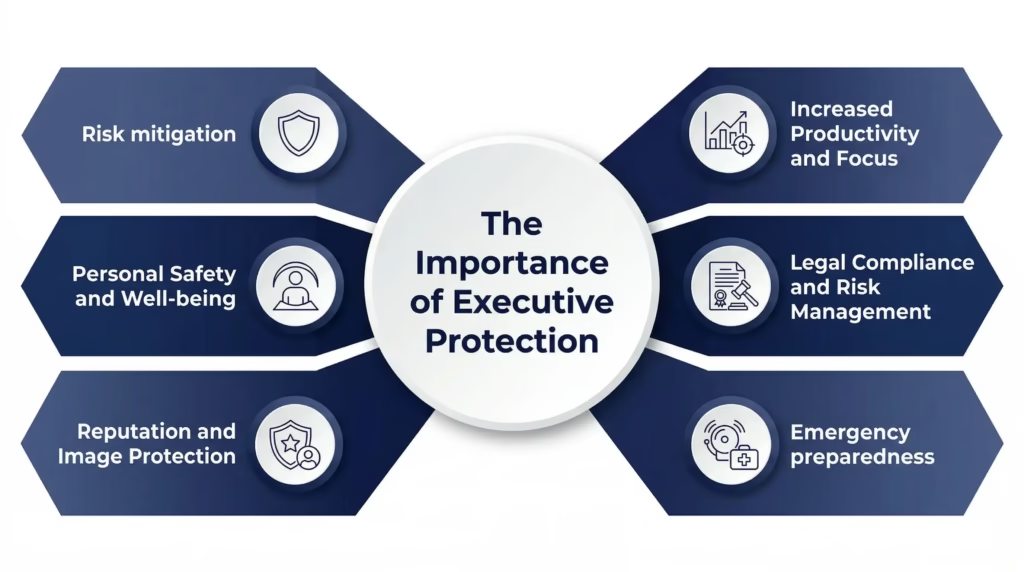
Some people see executive protection as excessive until a serious incident occurs. The value of a well-run protection program isn’t always visible. Here are some key reasons why it matters:
Risk Mitigation
The most important work in executive protection happens before any threat is visible. A qualified team focuses on identifying and reducing risks early through detailed threat assessments, routine vulnerability checks, and monitoring relevant intelligence sources. This includes reviewing daily schedules, travel routes, public exposure, and locations a client frequently visits to spot potential weak points before they can be exploited. Small adjustments, like changing routines, improving access control, or coordinating secure movement, can significantly reduce overall risk.
Personal Safety and Well-being
Knowing that someone has already reviewed your destination, checked your route, and prepared backup plans in case something goes wrong creates a strong sense of reassurance. A professional executive protection team continuously evaluates risks in real time, whether it’s travel, public appearances, or daily movements, so potential issues are identified before they become problems.
Reputation and Image Protection
In today’s world, perception matters just as much as safety. A single public security incident or having a visible protection failure can affect how investors, partners, and the public see you. Executive protection teams help prevent these situations by managing risks discreetly. Their goal is to prevent issues from escalating into incidents that could harm their reputation or draw unnecessary attention.
Increased Productivity and Focus
When personal safety is constantly on your mind, it quietly takes up mental energy that could be used elsewhere. Executive protection removes that distraction by handling risk management, planning, and situational awareness on your behalf. Executives under protection consistently report being more productive because they don’t have to constantly worry about their security.
Legal Compliance and Risk Management
For companies with executives traveling internationally or operating in high-risk environments, providing adequate security isn’t just good practice. In many cases, it’s a legal duty-of-care obligation. In California, including San Diego, employers have a legal duty to maintain a safe workplace under both federal OSHA and California Labor Code requirements. A documented executive protection program helps organizations meet those requirements and demonstrate that they took the responsibility seriously.
Duties of Executive Protection Specialists
An executive protection team’s job starts long before they’re standing next to a client. Their work is structured, layered, and mostly invisible by design. Here’s what an executive protection security checklist looks like:
Pre-Planning and Route Assessment
Before a client goes anywhere, the team goes first. They check venues, walk the routes, identify backup exits, locate the nearest medical facilities, and flag anything that could go wrong. In higher-risk environments, they may coordinate with local contacts or security personnel to confirm access control and situational conditions in advance. Nothing about a client’s movement is left to chance.
Threat Monitoring and Intelligence Gathering
Executive protection teams actively monitor a wide range of information that could impact their client’s safety. This includes online chatter, social media activity, protest movements, public statements from known threats, and broader geopolitical conditions. They also track location-specific risks such as local crime trends, major public events, traffic disruptions, and any developing situations that could affect movement or security in real time. They look for warning signs before they become real threats.
Physical Presence and Protective Coverage
This is the part people usually see: agents present on the ground at events, during travel, and at public appearances. Responsible and well-trainedGood executive protection agents know how to position themselves for fast response without standing out or making a client feel like they’re in a military convoy. Deterrence matters, but so does discretion.
Emergency Response and Coordination
If something does go wrong, the team already knows what to do. The team pre-plans evacuation routes. They establish communication with local emergency services in advance. The response is well-rehearsed rather than improvised. They also maintain secure communication channels, allowing updates to be shared instantly without delays or confusion.
Post-Operation Review
After any major assignment, the team debriefs. What worked, what didn’t, what needs to change. Good teams treat every operation as a chance to get better at the next one. They document key learnings and update protocols based on real-world outcomes. Over time, this continuous improvement process strengthens readiness and reduces risks in future assignments.
Qualities to Look for in an Executive Protection Team
Choosing the right executive protection team is critical because the quality of security often comes down to the people behind it and how they operate under pressure. Here’s what to look for when you’re vetting a team:
Experience and Expertise
Military special operations, law enforcement, and intelligence backgrounds are common among strong executive protection professionals because they build discipline, situational awareness, and the ability to perform under pressure. Certifications like CPP or PSP can demonstrate a solid foundation in security principles, risk management, and planning. When evaluating a team, it’s important to ask specifically about the types of assignments they’ve handled and the environments they’ve worked in.
Professionalism
Your team will be at private dinners, board meetings, and family events. They need to fit in and stay quiet. A professional executive protection agent isn’t just physically capable. They read the room, manage their presence, and never make themselves stand out.
Adaptability
Plans change, and threat conditions shift. A team that can only follow a rigid script is a liability. The best executive security guards adjust without losing their composure or their protective posture.
Communication Skills
Poor internal communication creates risk, while poor client communication leads to confusion and frustration. You want a team that handles the situation both smoothly and with calm and clear communication.
How Executive Protection Differs from "Bodyguard" Services
The word “bodyguard” gets used loosely. In reality, there’s a meaningful gap between a bodyguard and a professional executive protection operation.
A bodyguard typically refers to one individual positioned close to a client, whose primary role is to react if something happens. Executive protection, on the other hand, is a coordinated system. It involves a trained team working together across multiple layers of security. It starts with intelligence gathering, advance planning, and risk assessment rather than just physical presence.
Executive protection specialists are trained in advance work, counter-surveillance, evasive driving, secure travel coordination, emergency medical response, and communication with law enforcement. They also manage logistics, monitor threats in real time, and adjust plans dynamically as conditions change.
Another key difference is scope. A bodyguard is usually focused on close protection, while an executive protection team considers the entire environment surrounding the client, including venues, routes, schedules, digital exposure, and public perception risks. This broader approach helps reduce vulnerabilities before they can be exploited.
The other difference is mindset. A bodyguard is reactive by nature. An executive protection team’s goal is to make sure there’s nothing to react to.
Frequently Asked Questions
Q1. Is executive protection only necessary during travel or also in daily routines?
Both. Travel creates unfamiliar risks, but threats often develop around predictable routines too. For high-profile individuals, routine movements can be just as predictable and therefore just as vulnerable. A solid executive protection plan handles both.
Q2. How visible or discreet is an executive protection team in real-life situations?
It depends on the threat level and the client’s preference. Most business and personal contexts call for plain clothes and low visibility. Higher-threat situations may use a more visible presence specifically as a deterrent.
Q3. Will having executive protection affect my privacy or lifestyle?
Executive protection can affect your privacy and day-to-day lifestyle, but how much depends on the level of service you choose and how the team is structured. Professionals are trained to blend into the background, minimize attention, and avoid interfering with normal interactions. Most clients say the adjustment period is short. After that, the coverage fades into the background.
Q4. How is an executive protection plan customized for different individuals?
The process starts with a detailed risk assessment that considers factors such as the client’s public profile, industry, travel frequency, locations they visit, and any known or potential threats. The level of protection is also adjusted based on daily routines and personal preferences. The plan is built around those factors and updated as circumstances change.
Q5. What happens if a threat suddenly escalates while under protection?
Pre-established protocols like evacuation routes, law enforcement notification, and secure relocation activate at once. These protocols aren’t just improvised. The team has already rehearsed for it.
Q6. Can executive protection teams coordinate with local law enforcement if needed?
Yes, executive protection teams can coordinate with local law enforcement when necessary, especially during higher-risk situations or emergencies. They often establish communication channels in advance so any response can be quick and organized if an incident occurs.
Q7. What are the biggest mistakes people make when hiring executive protection services?
Common mistakes include waiting until after an incident to take it seriously. Another is hiring based on physical appearance rather than verified experience. Some also make the mistake of choosing the cheapest option without properly vetting credentials. Lastly, treating the executive protection team as staff rather than as security professionals whose assessments deserve weight.
Protect What Matters Most with Expert Executive Protection
Personal security at the executive level is all about operating intelligently in a world where risk is real and unpredictable. The right executive protection team doesn’t just provide safety. It creates stability, allowing you to stay focused, confident, and fully engaged in your priorities without constant security concerns.
If you’re evaluating executive protection services in California, Professional Security Guard Incd . provides professional, discreet, and highly trained protection teams built around your specific risk profile. Don’t wait for a reason to take security seriously. Take the responsible action today!