

Armed vs Unarmed Security Guards | Which Security Option Is Best?
Security is no longer just about having someone stand at the door. It’s about creating a safe environment where people, property, and business operations are protected at all times. Whether you’re managing a commercial building, running a retail store, organizing an event, or overseeing a construction site, one important decision often comes up: Should you hire armed or unarmed security guards?
At first glance, the difference may seem simple: one carries a firearm, and the other does not. But in reality, the choice goes much deeper than that.
In this guide, we’ll compare the differences between armed and unarmed security guards and help you determine which one is the right fit for your security needs.
Key Takeaways
- Armed guards carry firearms and are typically used in high-threat areas such as banks, government facilities, or locations with valuable assets.
- Unarmed guards focus on prevention and monitoring, making them ideal for offices, retail stores, residential communities, and events.
- Armed security services usually cost more due to advanced training, licensing, and insurance requirements.
- Unarmed guards provide a strong visual deterrent while maintaining a more approachable presence.
- Choosing between armed and unarmed security ultimately depends on your security goals, environment, and budget.
Table of Contents
ToggleWhat is Armed Security?
Armed security is a high level of protection provided by BSIS-licensed professionals authorized to carry firearms on duty. It’s deployed in high-risk environments such as government facilities, jewelry stores, banks, and executive residences—where threats like violence, asset loss, or theft demand more forceful intervention.
After obtaining their ‘Guard Card’ (official security guard license by BSIS), armed security guards in California get an additional certification to use firearms on duty. This includes passing a psychological evaluation and completing a BSIS-approved 14- to 16-hour firearms course. To maintain their permit, they requalify on the range every six months.
Unlike standard security services, armed security focuses not only on monitoring and prevention but also on rapidly responding to emergency security concerns. This makes it a strong option for sensitive environments. Armed guards act as a powerful deterrent and are trained to handle dangerous incidents.
However, armed security does have a few trade-offs. Typically, it comes at a higher cost, mainly because of the added licensing, insurance, and advanced training involved.
On top of that, while their presence can be a strong deterrent, it may feel a bit intimidating for some customers or guests, especially in more welcoming or public-facing environments. Businesses also need to account for the additional liability when bringing armed personnel on-site.
What Are the Responsibilities of Armed Security Guards?
Armed guards are responsible for maintaining safety in higher-risk environments where a stronger, more authoritative presence is needed. Their role goes beyond mere observation; they actively deter threats and are prepared to respond the moment something feels off.
Their daily responsibilities include:
- Monitoring property and surveillance systems: Carry out routine patrols across parking areas, perimeters, and inside the building, while keeping a steady watch on CCTV to catch unusual activity before it turns into a problem.
- Controlling access to restricted areas: Check IDs at entry points, maintain visitor records, and follow site rules to ensure only authorized people enter sensitive spaces like vaults, data rooms, or executive offices.
- Responding to theft, aggression, or active threats: Handle incidents like shoplifting, conflicts, or serious threats, using de-escalation techniques to regain control and keep people safe.
- Protecting high-value assets and executives: Provide security for VIPs during movements or transactions, and safeguard valuable items such as cash, jewelry, or equipment in high-risk locations.
- Coordinating with law enforcement when needed: Act as the first responder on-site, secure the area, and share clear, detailed information with San Diego police or sheriff’s deputies upon arrival.
What is Unarmed Security?
Unarmed security professionals are trained and licensed security guards who provide protection without carrying a firearm. They complete the required BSIS licensing and training to maintain a safe environment.
Unarmed guards provide a strong, visible security presence that deters crime and maintains order. They are commonly used in lower-risk environments such as offices, retail stores, residential communities, schools, medical clinics, and private events.
Because they do not carry firearms, unarmed security services are often more affordable and involve less liability, making them a cost-effective option for many businesses.
However, unarmed guards are not equipped to handle high-risk or potentially violent situations that require a stronger security response. In such cases, they follow protocol by contacting supervisors or law enforcement for support.
What Are the Responsibilities of Unarmed Security Guards?
Unarmed guards are responsible for maintaining safety in environments where prevention, awareness, and a visible security presence are the primary priorities. Their role focuses on observing daily activity, discouraging unwanted behavior, and helping maintain order.
Their daily responsibilities include:
- Patrolling property and monitoring surroundings: Conduct routine patrols inside and outside the premises to spot unusual behavior, safety hazards, or policy violations before they escalate into larger issues.
- Observing and reporting suspicious activity: Keep a close watch on the environment and document any unusual incidents, security concerns, or rule violations so they can be addressed quickly.
- Managing building access and visitor flow: Monitor entry points, greet visitors when necessary, and ensure people entering the property follow site guidelines and procedures.
- Providing a visible security presence: Maintain a professional on-site presence that discourages theft, vandalism, and disruptive behavior while helping people feel safe.
- Assisting staff, visitors, and customers: Offer support by giving directions, helping with general concerns, and acting as the first point of contact when someone needs assistance.
Key Differences Between Armed and Unarmed Security Guards
Armed and unarmed security guards both help keep people and property safe, but their roles aren’t the same. Armed guards are certified to use firearms and work best for high-risk events, and properties whereas unarmed security officers provide visible crime deterrence in low-risk settings.
Which one you choose usually comes down to how much risk is involved, the type of property, and your budget. Looking at the pros and cons of armed and unarmed protection makes it easier to pick the level of security that actually fits your needs.
Feature | Armed Security Guard | Unarmed Security Guard | |
Training Requirements | Requires extensive training, including firearm handling, use-of-force protocols, and state licensing or certification. | Requires basic security training, focusing on observation, reporting, and conflict de-escalation. | |
Response Capabilities | Can respond to sensitive or life-threatening situations, including armed threats and violent incidents. | Limited to non-violent intervention, observation, and contacting law enforcement when needed. | |
Specific Duties | Protect high-value assets, deter serious crime, manage dangerous situations, and may escort valuables. | Monitor premises, control access, patrol property, assist visitors, and report suspicious activity. | |
Cost Differences |
| More affordable, making them suitable for lower-risk environments or businesses with tighter budgets. | |
Liability Considerations |
| Lower liability risk since no weapons are involved, reducing potential legal complications. | |
Public Perception | Often seen as authoritative and intimidating, which can deter serious threats, but may make some people uncomfortable. | Viewed as approachable and less intimidating, ideal for customer-friendly environments like retail or offices. |
How to Decide Between Armed vs Unarmed Security Guards
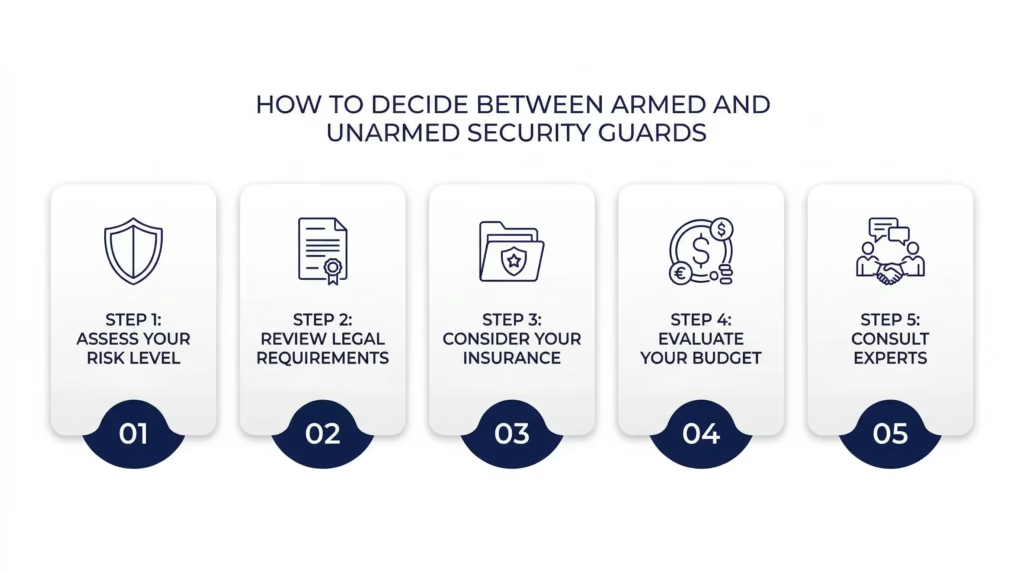
Deciding whether you need armed vs. unarmed security requires you to clearly assess your risks, regulatory obligations, and operational environment. It’s less about what sounds “stronger” and more about deploying the right level of protection for your situation.
Here’s how you can make this decision easily:
Step 1: Assess Your Risk Level
Start with the basics: what are you trying to protect, and from what? A quiet office building or retail store usually doesn’t carry the same risk level as a large public event, corporate headquarters, or a site handling valuable assets.
Think about past incidents, crime history, location, foot traffic, and the kind of activity happening on-site. Organizations such as Occupational Safety and Health Administration (OSHA) offer established guidelines and protocols to better understand workplace safety risks and how to mitigate them.
When you look at it objectively, the type of security you need often becomes pretty obvious. High-risk environments like financial institutions, banks, embassies, and jewelry stores demand visible authority of armed guards, whereas unarmed guards suffice for lower-risk settings like residential communities, retail outlets, fundraisers, and grocery stores.
Step 2: Review Legal Requirements
Before making any decisions, it’s worth checking what’s actually allowed in your area. BSIS licensing, local ordinances, and state law impose strict rules on armed security, dictating where they can and cannot operate. Certain San Diego municipalities have additional restrictions. Check compliance regulations in your area to avoid operational delays, licensing concerns, and fines.
Step 3: Consider Your Insurance
Insurance plays a bigger role than most people expect. Hiring armed guards can increase your premiums or require additional coverage, simply because the risk is higher. On the other hand, unarmed security is usually easier to insure.
It’s a good idea to talk to your provider and understand how your choice will impact costs and coverage.
Step 4: Evaluate Your Budget
Cost is always part of the decision, but it shouldn’t drive everything. Armed guards tend to be more expensive because of the training, licensing, psychological evaluation, biannual range qualification, and level of responsibility involved, while unarmed guards are usually a more affordable option for lower-risk settings.
The goal is to strike the right balance: invest enough to properly protect your property without overpaying for a level of security you don’t actually need.
Step 5: Consult Experts
If you’re unsure, this is where professionals can really help. Licensed security companies deal with these decisions every day and can assess your situation more objectively. They’ll look at risks, regulations, and practical needs, then recommend what makes sense. Sometimes, just having that outside perspective makes the choice much easier.
Combining Armed and Unarmed Security
Here’s something many businesses don’t realize: you don’t always have to choose between armed and unarmed security. In many cases, a layered approach of using both together is actually the most effective.
Security needs don’t stay the same all the time. A corporate facility that feels low-risk during the day might need extra protection at night, and situations like layoffs or large events can quickly change the level of risk. Having both types of guards in place makes it easier to adjust without having to rethink your entire setup.
Usually, unarmed guards handle the day-to-day: managing access, patrolling the property, assisting visitors, and keeping an eye on everything. Armed guards are there for sensitive situations, either positioned in key areas or ready to step in if something more serious happens.
This kind of arrangement works really well for larger properties, busy locations, or places with multiple entry points. It gives you the right balance of visibility and protection, while also making it easier to scale your security up or down as your needs change. In the end, you get the best of both worlds: a welcoming presence when things are routine and stronger protection when it matters most.
Common Mistakes When Choosing Armed vs Unarmed Security Guards
Assuming You Need Armed Guards
It’s easy to think “more security = armed guards,” but that’s not always true. In many places, an armed presence can feel like overkill. What really matters is the level of risk. In a lot of cases, a calm, alert, unarmed guard does the job just fine.
Choosing Based on Cost Alone
Going for the cheapest option might save money upfront, but it often shows later. Lower cost can mean less training or less reliability. A slightly higher investment can mean better response and fewer headaches down the line.
Neglecting Legal Compliance
Security isn’t just about hiring someone and calling it a day. There are rules around licensing and when armed guards are allowed. For example, many states require guards to hold an active security license and, for armed roles, additional firearm permits and training certifications. Skipping these checks can land you in trouble if something goes wrong.
Overlooking Experience Level
Experience goes a long way. Guards who’ve handled situations before know how to stay calm and act quickly. For unarmed guards, 1–2 years in customer-facing or low-risk roles is a solid baseline. Armed guards should have at least 2several years of experience in higher-risk settings, along with proper training in conflict handling and emergency response.
Ignoring Training Quality
Not all training is equal. Well-trained guards know how to handle situations calmly, communicate professionally, and spot potential risks before they escalate. On the other hand, poor training can lead to slow responses or mishandled situations.
Frequently Asked Questions
Can unarmed security guards provide adequate protection for high-risk events?
For large-scale events, unarmed guards on their own usually aren’t enough. If there’s a real chance of serious trouble, you’ll typically want some level of armed support. A lot of setups actually combine both, which tends to work best.
How does the legal liability differ between hiring armed and unarmed guards?
There’s generally more responsibility that comes with armed guards. Since weapons are involved, the rules are stricter, and the stakes are higher if something goes wrong. With unarmed guards, things are generally simpler, but you still can’t ignore licensing and basic compliance.
What factors determine whether an armed or unarmed guard is more cost-effective?
It really comes down to your situation. If the risk is low, paying extra for armed guards doesn’t always make sense. But in higher-risk environments, that added cost can be worth it for your safety.
How do insurance requirements change if I hire armed security versus unarmed?
Insurance tends to go up when armed guards are involved. There’s more risk, so coverage usually needs to be higher too. With unarmed guards, it’s generally more straightforward and a bit easier on the budget, though you’ll still need proper coverage in place.
Can armed guards handle non-violent incidents as well?
Yes, and that’s actually a big part of their job. Most of the time, they’re dealing with everyday situations, checking access, resolving minor issues, or just being a visible presence. The weapon is there for worst-case scenarios, not for routine interactions.
Protect Your Property with Experienced Armed or Unarmed Guards
At the end of the day, choosing between armed and unarmed security comes down to understanding what your property actually needs. There’s no single solution. What works for a retail space might not work for a construction site or a large event. The goal is to find the right level of protection that keeps people safe without creating unnecessary tension or cost.
This is where working with an experienced security provider matters. A good security company will help you figure out the right approach based on your risks, location, and day-to-day operations rather than just providing guards without a proper strategy.
If you’re based in San Diego and need reliable armed or unarmed security, Professional Security Guard Inc. is a trusted security company many businesses and homeowners rely on. Whether you need armed protection, unarmed guards, or a combination of both, having a team that understands the local landscape can make all the difference in keeping your property secure and running smoothly.
Recent Posts


Newsletter
Get Pro Security top Blog Posts in your email
Related Posts

Uncategorized
Is La Mesa Safe? Crime Rates & Statistics
Most people researching a move to La Mesa, California, check schools, commute times, and home prices. Crime tends to be
June 30, 2026

Uncategorized
Is San Diego Safe? Crime Rates, Neighbourhoods & Safety Guide
San Diego has one of the better safety reputations among major American cities, and the 2024 data largely backs that
May 20, 2026
Uncategorized
How Much Does Security Patrol Cost in San Diego?
Trying to find the security guard patrol rates in San Diego but failing to come across real, accurate prices? We
May 20, 2026