The success of any event, concert, or game is judged by the number of attendees. The bigger the crowd, the more successful it is considered. But high attendance also brings high risk. A relaxed crowd can turn volatile in seconds, and when it does, the consequences range from mass panic and stampedes to property destruction and fatalities.
This is where crowd control steps in: a structured set of strategies, trained personnel & safety protocols designed to keep large gatherings safe, organized, and incident-free. Understanding crowd control isn’t just for security teams, it’s essential knowledge for anyone who organizes, attends, or manages large-scale events, & this guide covers it all.
Key Takeaways:
Crowd control and crowd management work together to keep large gatherings safe,the former is reactive, the latter is proactive. Understanding your crowd type, whether excited, dense, passive, dynamic, or queueing, shapes your entire safety strategy. Effective control needs trained security personnel, clear signage, emergency planning, and real-time monitoring. Early planning, authority coordination, and continuous evaluation are crucial to prevent stampedes, overcrowding, and chaos at any event or public gathering.
What is Crowd Control & Why Does it Matter?
Crowd control refers to the management of large groups of people to ensure safety, order, and smooth movement during events or public gatherings. It helps prevent overcrowding, accidents, and panic while improving the overall experience. Crowd Control includes the actions taken to manage crowds during live situations, especially when problems arise. Effective crowd control is crucial for emergency response, security, and maintaining organized, safe environments in high-traffic areas.
What is Crowd Management & Why Does it Matter?
Crowd Management focuses on planning and organizing large groups of people before an event or gathering takes place to ensure smooth movement and safety. Unlike crowd control, which responds to issues as they happen, crowd management is proactive, helping prevent overcrowding, reduce risks, and create a well-organized, safe environment.
Crowd Control vs. Crowd Management
Crowd management is all about planning and organizing people before an event to ensure smooth movement and prevent risks. Crowd control, on the other hand, involves managing crowds during the event when issues arise. In simple terms, crowd management is proactive, while crowd control is reactive. Both work together to maintain safety, order, and a positive crowd experience.
Different Types of Crowd Dynamics
Different types of crowd dynamics show how people behave and move in various situations, such as events, emergencies, or public gatherings. Understanding where these crowds are commonly found and how they behave helps organizers plan effective safety measures. Below are the common types of crowds, where they typically occur, and how to manage them safely and efficiently.
Excited Crowd:
An excited crowd is a group of people showing high energy, enthusiasm, and emotional engagement, often seen at concerts, sports events, festivals, or product launches. While excitement creates a lively atmosphere, it can also lead to pushing, rushing, or overcrowding. Proper crowd management, clear communication, and controlled entry points help keep excited crowds safe and organized.
Dense Crowd:
A dense crowd is usually defined as people closely packed, 4-5 persons per square meter, in high-density gatherings like events, religious events, shopping streets, stadiums, or sometimes local public places where entry and exit points are restricted. People can not freely move, as they are restricted from being packed with each other, with quite close enforced physical contact with each other. Making smart entry and exit points, controlling crowd flow using technology, and employing professional personnel can help manage dense crowds.
Passive Crowd:
A passive crowd is a calm and orderly group of focused people gathered to watch or listen to something, such as lectures, movies, religious services, or public presentations. Passive crowd, also known as casual crowd are usually attentive, with minimal interaction or movement and low risk. You can effectively manage a passive crowd with clear signage, organized seating or queues, and staff guidance to maintain smooth flow and safety.
Dynamic Crowd:
A dynamic crowd is a group of people that is constantly moving, shifting, and interacting, commonly found at transit hubs, festivals, trade shows, shopping centers, and large public events. It is characterized by continuous movement, changing directions, varying crowd density, and people transitioning between multiple locations. These changing patterns can increase the risk of congestion and confusion. You can manage dynamic crowds with proactive planning, real-time monitoring, clear signage, and controlled pathways to maintain safe and efficient flow.
Queueing Crowd:
A queuing crowd is a group of people organized into lines while waiting for a service, entry, or access point. These crowds are commonly found at retail checkouts, bank counters, airport security, ticket counters, transportation hubs, and event entrances. They are characterized by structured lines(like a single line or an S shape), limited movement, and controlled flow toward a specific service area. Managing queuing crowds involves using barriers, clear signage, organized line systems, and staff guidance to maintain order, reduce wait times, and ensure smooth and safe movement.
Effective Crowd Control Methods
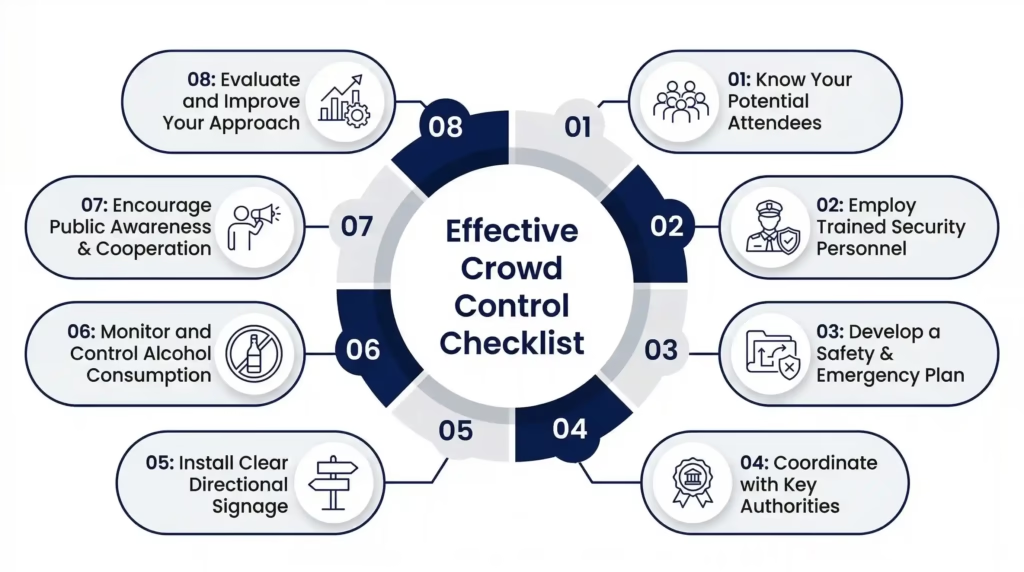
In effective crowd control methods, the authorities should focus on proactive planning, clear communication, and structured movement to maintain safety and order. Use barriers, designate entry and exit points, train staff, and install clear signage to guide crowd flow. Real-time monitoring, crowd density management, and phased arrivals or departures help prevent congestion, bottlenecks, and potential safety risks. Here are the steps you must consider while controlling any type of crowd.
Step 1: Understand Your Audience Size & Type
The size of the audience and crowd type is the governing factor while controlling it. Whether it’s a dense crowd of a few hundred people or you are dealing with an excited crowd of thousands of people, understanding this will decide your strategy. Understanding your audience size and type helps plan proper staffing, layout, and safety measures, ensuring smooth crowd flow, reduced risks, and effective crowd control management.
Step 2: Employ Trained Security Personnel
Employ trained security personnel to monitor crowd behavior, guide movement, handle emergencies, and enforce safety protocols. Their presence helps prevent disruptions, manage risks, and maintain order, ensuring a safe and well-controlled environment for everyone.
Step 3: Develop a Safety & Emergency Plan
Develop a safety and emergency plan to deal with unexpected situations such as overcrowding, medical incidents, or evacuations. Clear procedures, designated exits, and trained staff help ensure quick response, minimize risks, and maintain crowd safety.
Step 4: Coordinate with Key Authorities
Coordinate with key authorities such as local law enforcement, emergency services, professional security staff providers, and venue management to ensure effective communication and rapid response. Collaboration helps manage risks, handle emergencies efficiently, and maintain overall crowd safety.
Step 5: Install Clear Directional Signage
Install clear directional signage to guide crowd movement, highlight entry and exit points, and reduce confusing directions. Well-placed signs help improve flow, prevent congestion, and ensure safe, organized movement throughout the venue or an event space.
Step 6: Monitor and Control Alcohol Consumption
Monitor and control alcohol consumption to reduce the risk of aggressive behavior, accidents, and safety incidents. Implement responsible serving practices, limit access when necessary, and ensure trained staff are available to manage situations effectively.
Step 7: Encourage Public Awareness & Cooperation
Encourage public awareness and cooperation by clearly communicating rules, safety instructions, and event guidelines. Informing the attendees about the basic etiquette of visiting public places or events helps promote responsible behavior, reduces confusion, and supports smoother crowd movement and overall safety.
Step 8: Evaluate and Improve Your Approach
Evaluate and improve your approach by reviewing crowd performance, identifying challenges, and gathering feedback after events. Continuous assessment helps reassess your strategies, enhance safety measures, and ensure more effective crowd management for future gatherings.
Events and Locations That Demand Professional Crowd Control
Managing large gatherings requires careful planning and control to ensure safety and order. Without proper oversight, crowded environments can quickly become risky, leading to confusion, conflicts, or even dangerous situations.
That’s why effective crowd control becomes essential across various events and locations where large numbers of people gather:
- Moto Racing Championship
- Trade Shows and Events
- Charity Events
- Cultural Gatherings
- Performance Shows
- Concerts
- Festivals and Carnivals
- Golfing Events and Championships
Role and Responsibilities of Crowd Control Professionals
A crowd control professional’s role is to protect the crowd from any kind of brawls and fights. Let’s dive into some of the major roles of crowd control professionals.

Protecting a Venue
The crowd controller invigilates and monitors a venue’s security outside the venue. From managing long queues to checking the people meeting requirements to enter the venue, a crowd control professional has to take care of everything to keep the venue protected and people under control.
One of the roles of a crowd control professional is to stop anyone from entering the venue through the unofficial entrance or without fulfilling the requirements to enter it.
Checking the Attendees at the Entrance
Whether crowd controllers are hired for concert or event security, they must deploy themselves at the entrance. The purpose is to perform security check of attendees to ensure that no weapons or any harmful material is taken inside the premises.
Another reason to deploy crowd controllers at the entrance is to confirm identification and whether the person is eligible to enter or not. Crowd controllers must ask attendees to pass through the security gate and scan their bags and other items with a metal detector.
Monitoring Security Systems
Some crowd control management personnel have to work within a room to monitor security cameras and take action in case of any trouble. They may inform other members of the team to alert them of any unusual situation and resolve before things turn out to be worse.
Maintaining Discipline on Premises
Large crowds are hard to handle and without taking the lead, it might turn into a mess. The crowd control officer has to maintain discipline and a smooth flow of vehicles as well as people entering the venue. From managing queues to guiding the attendees, crowd control management has to ensure discipline on the premises.
Detaining Attendees in Case of Suspicion
Not everyone attending the event is the same. Some of the attendees might be attending the event to create chaos and trouble within the venue. The crowd control management has to take serious actions against those culprits by either detaining them or asking them to leave. In the worst-case scenario, they may hand over the culprit to the police.
Patrolling Property to Ensure Security
Crowd control strategies also include patrolling to ensure everything in the premises and surroundings is in place. Moreover, in some areas, there might be an unavailability of security cameras, which can be vulnerable to the security of premises. The crowd control officer also has to do patrolling in the premises to ensure optimal security.
Give Directions to Guests and Attendees
Some areas of the premises are too big that it becomes difficult for anyone to get into the place. However, crowd control management will give directions to the guests and attendees who are looking for some direction to get to the right place.
Watch For Safety Hazards
Apart from brawls, fights, and security threats, the officer must ensure that safety measures are top-notch. For instance, the fire extinguisher is installed, the emergency exit is clear, and entry and exit points are secure. In case of any discrepancy, appropriate measures need to be taken.
Contacting Police
When chaos happens, things might turn out from bad to worse. Sometimes it gets out of crowd control management to handle the situation. That is where police is contacted to get involved and control the crowd. The police may deploy force to disperse the crowd, use water cannons, or throw tear gas.
Frequently Asked Questions
What factors increase the risk of crowd surge or stampede at events?
Crowd surges, or stemepdes mostly occur due to high crowd density, poor planning, restricted movement, panic, or sudden excitement. Narrow exits, blocked pathways, and poor crowd control can also increase risks, especially in tightly packed areas.
How early should crowd control planning start before an event?
Crowd control planning should begin at the earliest stage (12-16 weeks for mega events and 4-6 weeks for small events) of event planning, ideally when selecting the venue or proposing the event. Early planning helps assess risks, allocate resources, and implement effective safety measures before crowds arrive.
What steps are taken to prevent overcrowding in restricted areas?
To prevent overcrowding, organizers use barriers, real-time monitoring devices, designated pathways, controlled entry points, and strategic site management with professional staff. Clear signage and proper layout design, using visitor data to predict peak time, help maintain smooth flow and reduce congestion in restricted or high-risk areas by implementing capacity limits.
How can technology assist in crowd management?
Technology such as CCTV cameras, AI monitoring, and crowd density sensors helps track real-time movement and detect risks. These tools assist organizers in predictive analysis to respond quickly, prevent overcrowding, and improve overall safety.
How many crowd managers do you need for your event?
The number of crowd managers depends on event size, risk level, and venue layout. A common guideline suggests one highly trained staff member per 100–250 attendees, with higher-risk events requiring more personnel. But more managers are better for dense or excited crowds to keep things calm and well-organized.
Ensure Crowd Safety with Professional Security Guard Inc.
Don’t risk your crowd’s security, as each second counts when thousands of people gather at a point. Manage your crowd and ensure their safety with Professional Security Guard Inc. Whether you’re hosting a high-energy concert, a packed stadium game, or a large-scale public gathering, don’t leave crowd safety to chance. Our trained and experienced personnel have 10+ years of local expertise with advanced strategies and a proactive approach to help prevent risks and maintain order. Contact us today to get a safer, well-managed, and customized security plan.